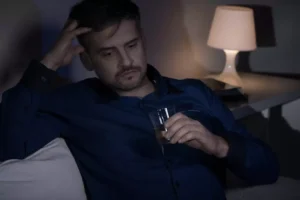
Step one asks you to identify out loud that you have continued to use substances despite this use impacting your life and or the lives of others negatively. It is a beautiful paradox, that being “powerless” can ultimately empower one to make significant meaningful long-lasting change. To admit powerlessness over alcohol (or drugs) means accepting the fact that you’ve lost control over your substance use. You accept that your life, either internally, externally or both, has been impacted by maintaining the use of a substance and this addiction has negatively influenced your thoughts and actions.

Drinking Is Making You Sick
- They can step out of the process at any stage by simply acknowledging they need help, even when they don’t exactly see all the places that this help is needed.
- We never want to seize control more than when we don’t have it — and when we’re morally distressed, it can really feel as though we don’t have it.
- Articulating and appropriately expressing feelings or desires can become difficult or exhausting.
With almost two decades of experience with Step 3, I can say that my concept of a Higher Power has changed a million times. We sometimes think that in order to “succeed” in life, we need to play a certain role, or lead with our “best selves.” This is true in certain contexts. It’s suggested that you highlight your strengths on a job powerless over alcohol interview for instance. But when it comes to recovery and to being authentic human beings on a spiritual path, we have to include all of who we are. I’ve written about giving ourselves permission to be human, and becoming more of who you are in earlier posts. The basic point is that we don’t need to be perfect to be spiritual.
What is Hepatitis C? Causes, Symptoms & Treatment

Today with the understanding of powerless, our number one priority is our relationship with our creator and how we can best serve. We sometimes feel as if we are the victim and point fingers at other people or situations. This kind of thinking prevents us from looking at our powerlessness. Accepting our powerlessness opens us up to the willingness for a Higher Power’s help. We let this Power remove the problem by practicing the rest of the steps as a way of life. Until we can accept powerlessness, we will not fully seek Power.
Mental Health Services
It denies the reality of all the other unsuccessful attempts you’ve made to stop as a result of major consequences. Step 1 of AA references the need for members to hit rock bottom before genuinely understanding their addiction. Your rock bottom is whatever makes you realize alcohol is destructive to you and your loved ones.
Tips for Starting and Working Step 1 of AA
That makes “admitting powerlessness” a form of strength. When we admit that we are powerless over alcohol or drugs, we admit that we are living with a disease that alters the chemical makeup of the brain. Someone suffering from this disease did not make a choice to go too far and lose control, and they are not inherently lacking in values or good character. Powerlessness is often mistaken for weakness, but this is actually a step of strength.
The Power in the First Step: Accepting Powerlessness
This statement has been part of a great discussion on whether or not recovery can come without sobriety. Our hope is merely to capture the spirit of the fellowships, and to approach people with the language they commonly use to describe the disease of addiction. If you can acknowledge and accept those two things—that you have an addiction and it’s causing problems—then you have completed the First Step of Alcoholics Anonymous, and you have officially begun your recovery. Even if you don’t believe in God, you can still undergo the AA first step. In fact, Step One is an essential part of your recovery. If there were only a workbook to help you figure out how to deal with the unmanageability in your life, then everything would be ok, right?
“Our sound reasoning failed to hold us in check. The insane idea won out.” (Big Book, Page
- Because Flea Bottom has always been there and a big part of Thrones and Dragon lore.
- You aren’t powerless when it comes to entering treatment or a recovery program.
- There comes a moment where you’ve been spreading this lie for the sake of a free pint of Guinness and now you have to show up and there’s a fucking big dragon there.
- This is not an excuse for continuing down the same destructive path.
- When you lay it all out, you will see that you did not have control in those moments.
In our recovery programs for men in Colorado, we work on this step. The AA first step, admitting powerlessness and acknowledging the unmanageability your addiction brings, is a crucial leap toward lasting recovery. It’s a moment of profound self-realization and humility, opening the door to hope, healing and transformation. Remember, the 1st step AA is not the end but the beginning of a brighter future. If you’re struggling with alcohol addiction or drug addiction, please contact us now at FHE Health for compassionate help and support. Admitting powerlessness means admitting that no amount of trying or practicing or self-control is going to change the way that drugs or alcohol affect your brain, thus this is the first step in a lifelong journey of recovery.
- You might not be ready to take the first step at your first AA meeting, and that’s okay.
- So what’s it been like for you as an actor to come into this huge HBO show?
- We are visually recognizing our growth with a unified look that better reflects who we are today and the passion we have for helping everyone with their addiction and mental health recovery journeys.
- He’s thinking, “A lot of these people look more Targaryen than I am.” There’s a lot of people with white hair.
- Powerlessness refers to a lack of control, and it helps you realize that there are things you can do to treat your addiction and create the life you want.
Are You Struggling with Facebook Addiction Disorder?
Trying to wrap my head around a personal relationship with a Higher Power led to some interesting ideas about what I thought God would want for me in any given situation. My thinking was based on ideas of right and wrong, moral codes, spiritual teachings, and of course―my personal opinions. The problem here was that I wasn’t actually turning anything over. I was doing my best to behave “better.” While there is a place for behavior modification in recovery, and in growth and development generally, this orientation falls short when it comes to surrender. When I am deciding what is best (even when it is based on spiritual teachings) I am determining an outcome. This means that I am still trying to control and manage my life and am not, in fact, turning anything over.